
Honolulu County Sex Offender Checks
The Hawaiʻi Sex Offender & Other Covered Offender Search is the primary public channel for Honolulu County. The Hawaii Criminal Justice Data Center, or HCJDC, operates it under Chapter 846E. The directory updates nightly and accepts identity or location clues. A person may search a name when checking a specific identity, or use street, city, island, and ZIP fields for community awareness.
Honolulu has no separate county registry or risk-ranked local list. HPD and the Attorney General handle in-person registration work on Oʻahu, while HCJDC publishes the statewide directory. The National Sex Offender Public Website adds a cross-state search when the relevant residence or conviction may be outside Hawaiʻi. Neither channel replaces fingerprint confirmation when two people have similar names.
Honolulu Covered Offender Meaning
Hawaiʻi uses the term “covered offender” because Chapter 846E reaches more than offenses commonly labeled sex crimes. It also includes qualifying offenses against minors. Public inclusion follows a conviction that triggers the statute. It is not a finding that the listed person will offend again, and Hawaiʻi does not display a public low, medium, or high danger score.
This distinction changes how a Honolulu County sex offender lookup should be read. The profile documents identity, conviction, address, and compliance facts made public by law. It cannot establish present conduct. An older offense description may also use the wording of another jurisdiction or the law in force at the time.
The term also explains why a search limited to familiar offense labels can mislead. Read the covered-offense statute and conviction jurisdiction on the profile itself. A profile is not a full rap sheet, and it does not disclose confidential investigative material or victim identities. Those boundaries protect the registry's narrow public purpose while leaving other criminal records with their proper custodians.
Hawaiʻi Covered Offender Registry Searches
Use the official search gateway and the narrowest dependable fact. Exact spellings can miss aliases, while a broad Honolulu or Oʻahu search can produce many possible matches. The registry FAQ cautions that positive identity requires fingerprints, so physical descriptors remain comparison clues rather than proof.
- Open the official registry, read its terms, and select “Start a Search.”
- Enter a name for an identity search, or use street, city, island, or ZIP for an area search.
- Compare aliases, photographs, and descriptors without assuming that a similar name is a match.
- Open the profile, read each covered offense and address field, then note the update or print time.
| Field Label | Type | Required | Notes |
|---|---|---|---|
| Name | Text | No | Search by offender name |
| Street name | Text | No | Supports address-area lookup |
| City | Text or dropdown | No | Municipality or place field |
| Island | Dropdown | No | Select Oʻahu for Honolulu County |
| ZIP code | Text | No | Use a five-digit area |
Note: The official FAQ does not promise a county or radius field, so do not rely on one unless the live interface displays it.
Honolulu Registry Updates Have Limits
Nightly updating does not mean every Honolulu County address is correct at the moment of search. A move, work change, school change, or new vehicle can fall between reporting, agency processing, and the next update. Transient or nontraditional residences may also be handled under special statutory rules. Printed information begins aging as soon as it is saved.
When a detail appears wrong, contact the HCJDC Sex Offender Registry Unit at (808) 587-3350. Give the public profile reference and identify the precise fact at issue. Do not confront the person. HCJDC can compare the report with registration records and route a possible compliance issue to the proper authority.
Broaden an address search with care. An exact street entry may fail because the spelling differs or the latest change has not posted. Island and ZIP fields can reveal nearby results without promising a radius search that the official interface may not offer. Save the date and time of any result used for later reference.
Registry Profiles: What They Show
A Honolulu County profile brings together public identity, conviction, address, and registration data. Some fields appear only when Chapter 846E makes them public. Fingerprints, victim identities, confidential investigations, and a full criminal history are not displayed.
| Name & Aliases | Published names and aliases used to compare possible identities. |
|---|---|
| Photo & Description | Photograph, sex, race, height, weight, hair, eyes, and public scars, marks, or tattoos. |
| Address | Residence, mailing, or temporary address information made public by statute. |
| Covered Offense | Conviction jurisdiction, date, statute, and offense description. |
| Work, School & Vehicle | Details appear only to the extent Chapter 846E designates them public. |
| Registration Status | Compliance and registration information rather than a danger rating. |
Honolulu Registration Counters Changed
Oʻahu’s in-person process changed on August 1, 2025. Covered offenders no longer make these updates at the former HCJDC SOR counter. Initial registration, quarterly checks, changed information, and annual duties now go through one of two Honolulu locations. The Attorney General’s registration instructions should be checked before travel because the sites use different service models.
AG Investigations Division
465 South King Street, Room B-2
Honolulu, HI 96813
(808) 620-3508
Appointment only, Monday through Friday, 7:45 to 11:45 a.m.
HPD Records Division
801 South Beretania Street
Honolulu, HI 96813
Walk-ins only, Monday through Friday, 8 a.m. to 3 p.m.
The official Honolulu County registration information comes from the Attorney General. The image below shows that source in context.
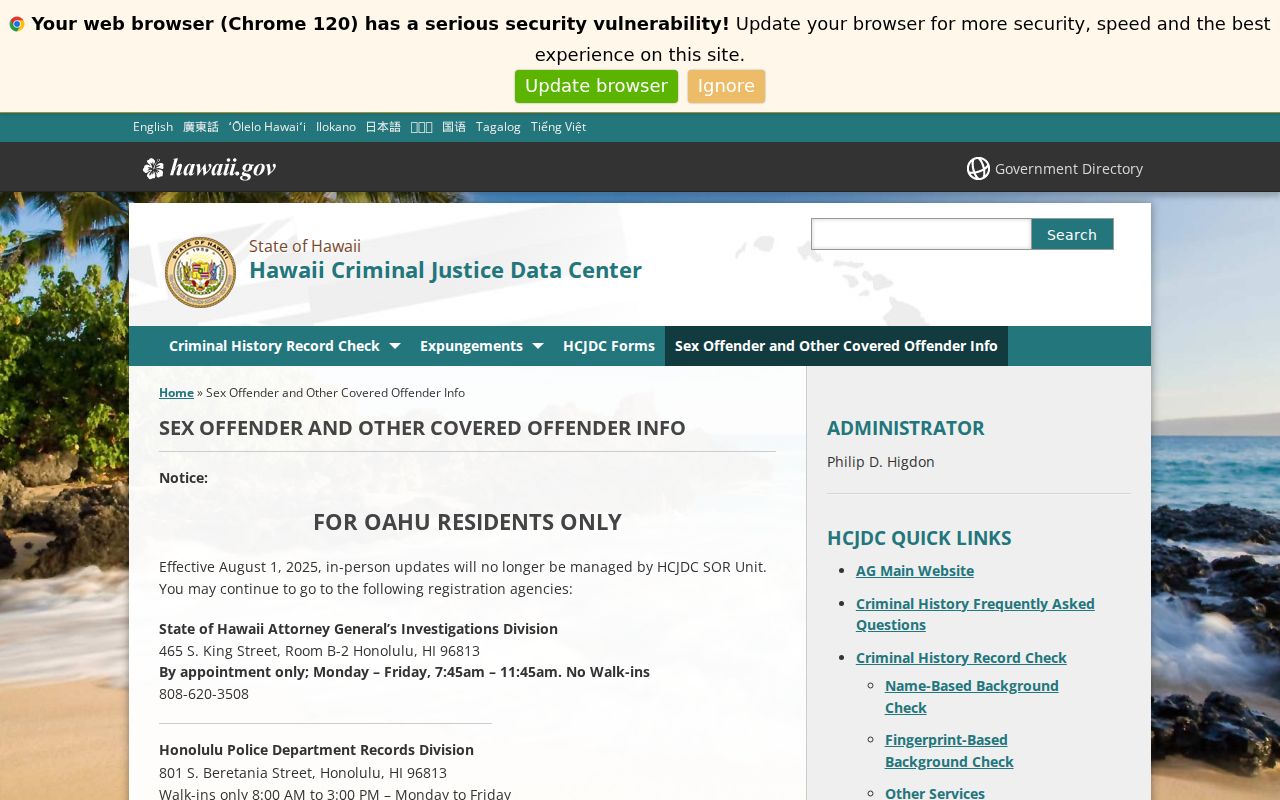
The two-counter system makes appointment status as important as the address when completing a timely update.
Registration Levels and Duties in Hawaiʻi
Hawaiʻi does not use the simple public tier chart common in some states. Lifetime registration is the default for a covered offender, although an eligible person may petition a court for termination after meeting statutory terms. The successful petition is an exception, not a public “low-risk tier.” Failure to comply is a Class C felony.
| Hawaiʻi Category | Public Risk Tier? | Duration or Verification |
|---|---|---|
| Covered offender | No public danger tier | Lifetime registration by default |
| Eligible petitioner | Not a low-risk label | May seek court termination after statutory requirements |
| Address verification | Depends on status and address | Described permanent-address registrants verify quarterly in January, April, July, and October |
Changes and triggering events have short deadlines. The official FAQ states that registration is generally due within three working days after a qualifying arrival, release, conviction, probation, or parole event. Visitor rules can apply after more than ten days or thirty aggregate days in a calendar year.
Honolulu Proximity Registry Alerts
The official proximity alert service uses a myHawaii account. A subscriber can receive notice when a covered offender updates information or moves into the selected area. Alerts are useful for ongoing Honolulu County awareness because they reduce the need to repeat the same area search each day.
An alert still needs the same careful reading as a direct search result. It reports a registry change, not a new offense or an official prediction of harm. Compare the profile fields and update time, then use HCJDC’s contact line for a suspected error.
For an interstate question, repeat the lookup through NSOPW. A person may have registration information in another state even when the Hawaiʻi directory returns no result. The national layer gathers participating jurisdiction searches, while Hawaiʻi remains the best source for local profile details and Honolulu reporting contacts.
Honolulu Offender Name Matches
Aliases, age details, photographs, and physical descriptors help narrow a Honolulu County lookup. They do not create positive identification. The registry does not display fingerprints, and HCJDC states that fingerprints taken during arrest or incarceration are the reliable means of confirming identity.
This matters when common names, changed appearances, or incomplete address facts overlap. Avoid sharing a result as fact merely because one field matches. For review of a broader conviction record, use the official HCJDC process described in the Honolulu County criminal history overview.
The Women’s Community Correctional Center source provides state corrections context for custody and reentry records that remain distinct from registry data.
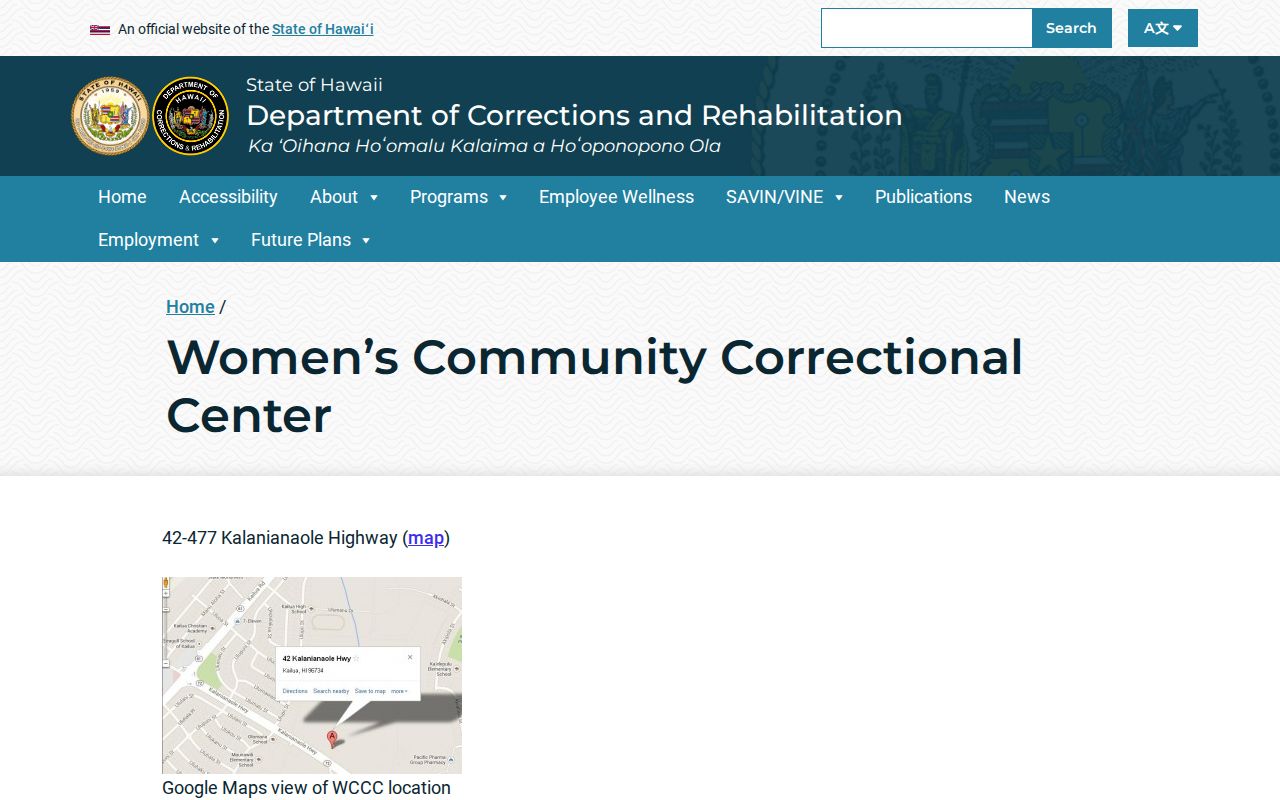
The facility image reinforces a key boundary: custody records and a covered-offender profile answer different legal questions.
Using Registry Information Lawfully
Registry information supports safety planning and community awareness. Search results should be used to understand public registration facts, set an official alert, or report a specific inaccuracy. They should not be turned into a campaign of threats, public shaming, exclusion, or retaliation. The directory itself warns that public listing does not establish current dangerousness.
Misuse warning: Under Hawaiʻi Chapter 846E, using registry information to injure, harass, or commit a crime may lead to criminal prosecution, civil liability, or both.
Report a possible violation or bad address to HCJDC. For a person who may be registered in another state, use NSOPW rather than assuming a blank Hawaiʻi result means no registration duty exists.